How Generative Engine Optimization (GEO) Works and Why Your brand Needs It
I was on a strategy call with a B2B SaaS founder last Tuesday, and he dropped a frustration I’ve been hearing on repeat for six months.
“Our Google rankings didn’t drop,” he told me. “Our target keywords are sitting right there on Page 1. But our inbound demo calendar is practically empty. Where did everyone go?”
Such a situation may arise when a decision-maker faces a problem in business. They no longer search Google for ‘best marketing agency for companies’, ‘free market research tools for small businesses’, or ‘3000 word essay format’. Instead, they open a chatbot like Perplexity, Gemini, or ChatGPT, ask their simple question, and get an answer.
SparkToro data shows that nearly 68% of US Google searches now end with zero clicks. On top of that, Google AI Overviews are hijacking over a quarter of all queries. If your digital marketing strategy is still engineered entirely to win clicks on standard search engine result pages, you’re playing a game that doesn’t exist anymore.
We are living through the shift to generative engine optimization.
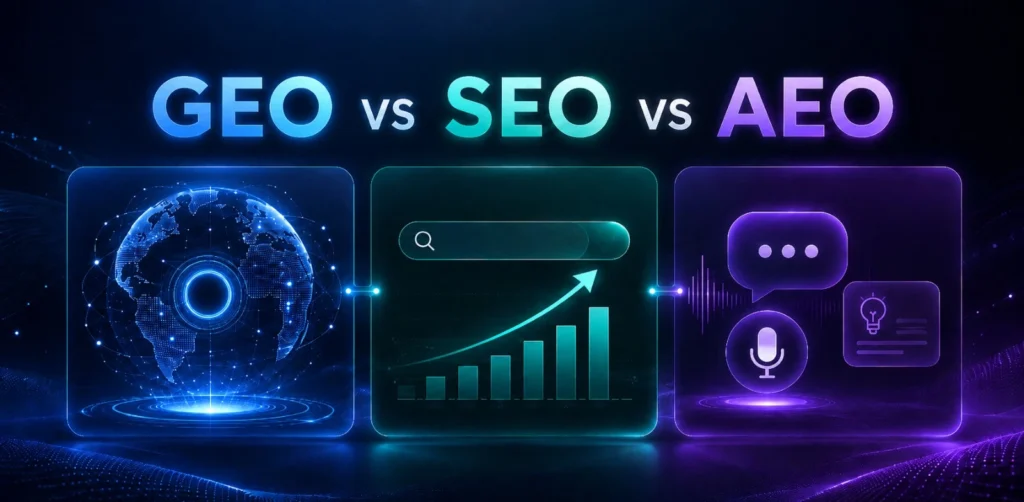
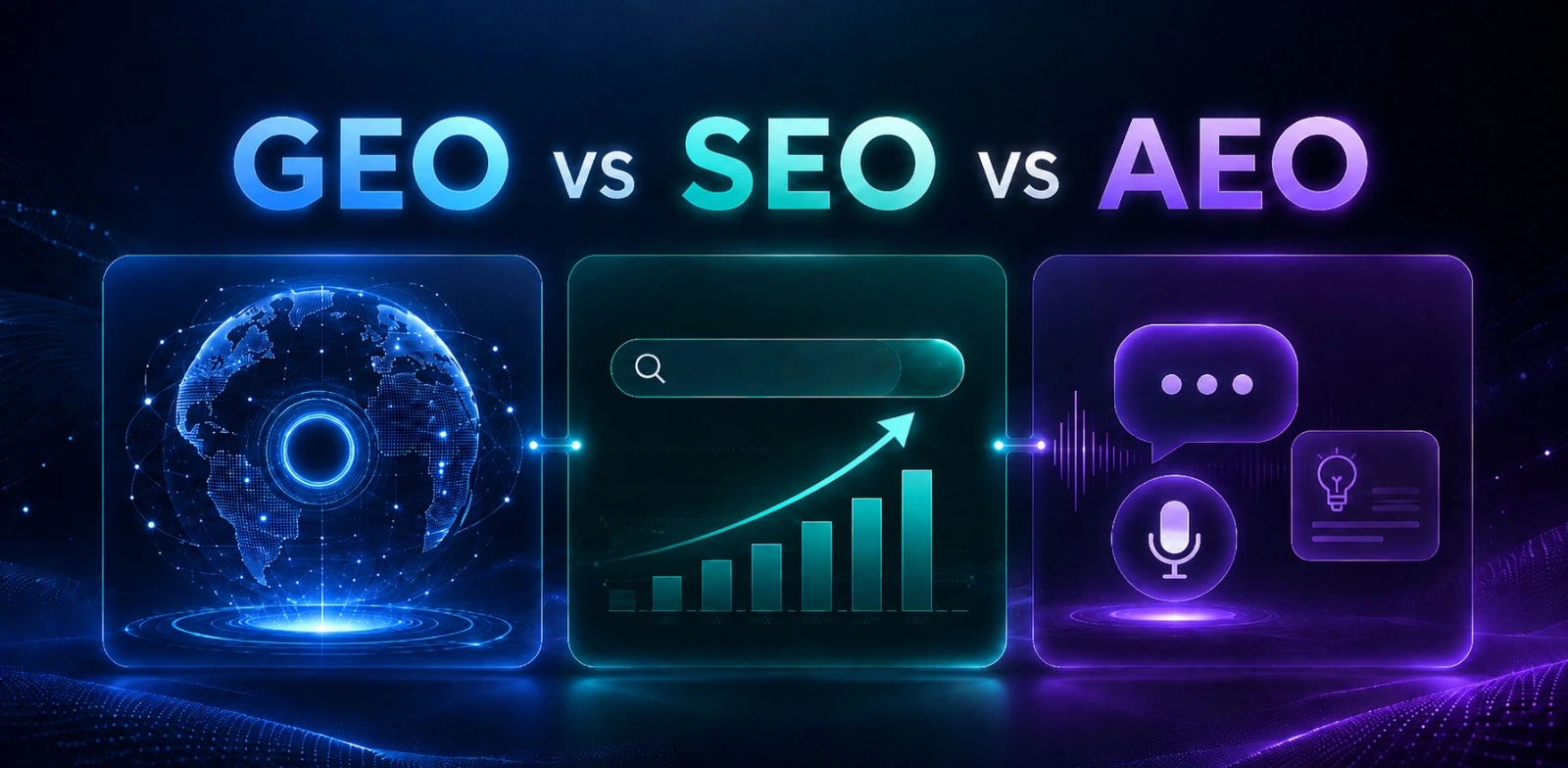
What is Generative Engine Optimization (GEO) and Why Is Traditional SEO Changing?
Let’s clear the air. Generative engine optimization (frequently searched as engine optimization geo) isn’t a completely different universe from search marketing—it’s the logical evolution of how search engines handle data. It’s the exact practice of formatting, writing, and technically publishing your content so that conversational AI models actually pull, cite, and recommend your brand.
Old-school SEO was obsessed with discoverability. You packed keywords into title tags, built random backlinks, and chased PageRank metrics.
GEO is entirely about citability and synthesis.
Generative AI models don’t just hand users a list of specific information. Their primary task is to first gather information from internet sources, then verify the credibility of this information, and finally, provide a synthesized narrative with citations.
If your website is not technically or content-wise indexed, or only a few paragraphs are indexed, AI systems will ignore it mostly. They rely on Retrieval‑Augmented Generation (RAG). When someone asks a question, the platform searches reliable web indexes, extracts clean snippets of information, removes unnecessary semantic noise, and constructs a customized answer. Should a crawler view your site as disorganized, it will essentially vanish from its results.
The Hidden Cost of Ignoring AI Search Visibility
The rise of AI-driven search has given rise to what seasoned marketers call the “AI dark funnel.” Buyers evaluate software within chat apps, read specifications, and shortlist vendors long before they ever visit a landing page or speak to a sales rep.
If your company is not included in AI-generated recommendations, you need to understand that you are losing interested buyers.
- For B2B companies and SaaS companies: Procurement teams ask ChatGPT to pit competitor architectures against each other. If your platform isn’t in the underlying retrieval set, your competitor wins the deal upstream.
- For ecommerce and Shopify brands: Shoppers look to Claude or Gemini for precise product recommendations based on strict constraints, completely bypassing old-school shopping directories.
- For specialized services like pharmaceuticals, hospitality, and small businesses: Local search intent is now being replaced by conversational query engines, which display a list of top-rated local service providers right on the screen. As a result, people are seeing the benefits of GEO for their businesses.
Failing to optimize for AI answer engines means your brand is missing out on the fastest growing traffic channel on the web.
The Core Pillars of a Winning GEO Strategy
Moving to a real geo strategy means changing how your team creates and structures content. Based on recent industry shifts and platform updates, here are the tactical changes you need to make right now:
1. The Answer-First Principle
AI models value absolute clarity. Long, meandering blog posts packed with keyword stuffing will destroy your chances of earning an AI citation. You have to flip traditional copywriting on its head. Put your primary takeaways, definitions, and direct answers right at the top of the page. Structure your subheadings around real questions and use clean bullet points that LLMs can easily chunk and parse.
2. Evidence-Based Content and Fact Density
LLMs dislike hyperbole and actively avoid speculation. They seek verifiable facts, precise figures, and expert opinions.
To maximize your AI visibility, your content needs high information density—such as internal benchmark data, proprietary research, or rigorous technical analysis. The more factual evidence you provide, the easier it becomes for vector embedding models to trust your brand.
3. Technical Markup and Entity Authority
Crawlers need deep semantic context. If you’re not using JSON-LD structured data, you’re walking in the dark. Clean technical markup clearly tells search engines who you are, what you sell, and how your content relates to the larger industry context. It makes things a lot easier than they used to be. Isn’t that right? Brand-level optimization ensures that your company name, product line, and leadership team are recognized as distinct and authoritative entities across the web.
4. Digital PR and Earned Media Trust
Generative engines do not pull answers from unverified blogs or scraped content mills. They pull from high-trust digital entities. That is why pr media relations and third-party media placements are non-negotiable. When reputable news sites, industry blogs, or podcasts mention your business, unlinked and linked brand mentions teach AI systems that your company is a verified market authority.
Industry-Specific GEO Playbooks
One size fits nobody. Different sectors require entirely different approaches to capture AI search visibility.
GEO for SaaS and B2B Companies
B2B sales cycles are messy, long, and heavily researched. Decision-makers lean on conversational tools to do technical due diligence. A solid saas geo framework focuses on capturing complex comparison queries—like “What are the technical differences between Tool A and Tool B for enterprise security?” By publishing transparent documentation, raw benchmark data, and API integration guides, B2B brands position themselves as default recommendations for LLMs.
GEO for Ecommerce and Shopify Brands
Online retailers are now turning to conversational shopping assistants. Shoppers ask generative engines to select products based on highly specific filters (“Find an organic, chemical-free face serum that’s suitable for sensitive skin, available on Shopify, under $40”, etc). Optimizing for ecommerce means organizing your product catalog with rich metadata. Enabling customer reviews on trusted platforms, and ensuring your product feeds are error-free & machine-readable.
GEO for Pharma, Hotels, and Small Business
Trust plays a pivotal role in local or highly regulated markets. Generative engines aggregate local reviews, regulatory filings, and verified credentials to generate summaries. However, it is important to note that to achieve AI-driven visibility, small businesses, boutique hotels, pharmaceutical companies, and niche or smaller brands must establish a presence in local packs, well-structured Q&A sections, and compliant, verified portals.
Measuring Success: AI Search Visibility Metrics and KPIs
What cannot be measured cannot be managed. Traditional measurement methods—such as ‘raw organic traffic’ and conventional keyword rank tracking—no longer provide a comprehensive picture. Therefore, modern growth teams require a new set of AI search visibility metrics and KPI.
- Citation Frequency: It tracks how many times your brand, domain, or products are explicitly mentioned as a source across ChatGPT, Perplexity, Gemini, and Google AI Overviews.
- AI Engine Visibility Share: Measuring your presence in synthesized answers for high-intent conversational queries compared to your top market competitors.
- Assisted Pipeline Conversion: Analyzing how inbound lead quality and closed-won revenue scale as your conversational search visibility improves.
- Visibility Audit Scores: Running regular AI audits to map your brand’s footprint against vector retrieval models and patch up semantic gaps in your content ecosystem.
Conclusion: Securing Your Place in the AI Citation Economy
The digital marketing playbook has permanently evolved. Traditional search isn’t dead, but the most lucrative buyer discovery is migrating rapidly toward conversational AI interfaces. Brands that adapt early—structuring their digital footprint for seamless retrieval, investing in serious earned media, and partnering with a specialized generative engine optimization agency—will capture market dominance.
Don’t wait for your inbound pipeline to run dry. Audit your AI visibility today, tighten your technical and content frameworks, and make sure your brand becomes the definitive answer your customers are looking for.